Sofema Aviation Services (SAS) Considers Biohazards within the Aircraft Maintenance Environment
PPE is the last line of defence. Always try to eliminate/contain first (isolate systems, depressurize, cordon off), then add PPE matched to the task.
Considering Biohazards within the Aircraft Environment
- Lavatory waste system: Waste tank, service couplings, vacuum lines, drain masts, valves, “blue juice” (deodorant/disinfectant) mixed with human waste.
- Risk = bloodborne pathogens + splash/aerosol + chemical.
- Potable water system: Tanks, lines, couplings, boilers, galley taps/ice makers.
- Risk = microbial contamination (e.g., Legionella), biofilm.
- Cabin & galley: Vomit, blood, faeces, urine (including from infants), spoiled food, broken sharps, overflowing bins; seat/soft furnishings absorb fluids.
- Environmental control: HEPA/recirc filters capture biological particulates
- Risk = dirty filters leading to contaminated dust.
- Cargo/exterior: Animal transport residues, medical/catering waste, bird/rodent droppings after strikes or gate exposure; insect infestations.
- Left-behind paraphernalia: Needles/razors in seat pockets, bins, lavs.
General Rules (Universal Precautions-Always)
- Assume all blood/body fluids are infectious.
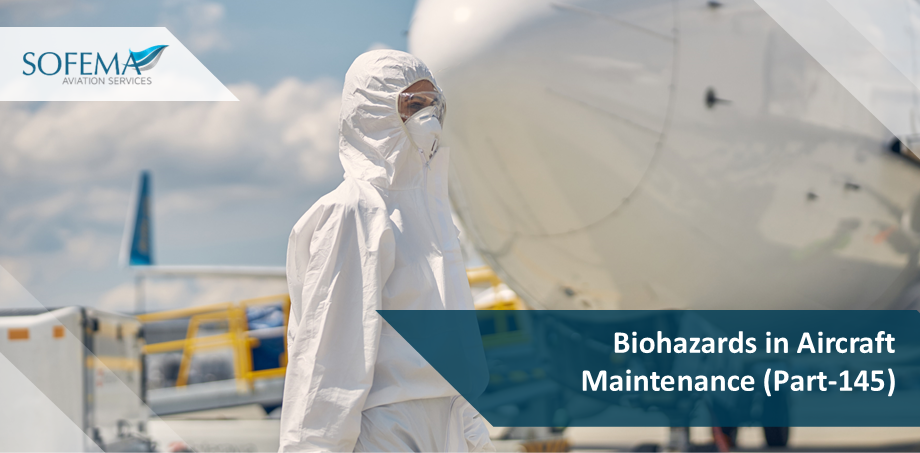
- Use at least Minimum PPE: disposable nitrile gloves. Add sealed goggles + face shield if splash risk; apron/coverall for larger spills; waterproof over-boots if underfoot contamination likely.
- Sharps: Never pick up by hand. Use tongs/forceps (from the kit) into an approved sharps container.
- Sharps = Anything that can pierce skin: used needles, lancets, razor blades, broken glass, scalpels, craft blades, syringes (with or without needle), and some jagged metal/plastic pieces
- Chemical compatibility: Use aircraft-approved disinfectants per MOE/task card/OEM—no household bleach/chlorine on airframe/avionics unless explicitly approved.
- Waste: Segregate into biohazard bags/containers; sharps into rigid sharps bins; route through your licensed disposal stream.
- Hygiene: Wash hands after glove removal; do not eat/drink until decontaminated.
Lavatory Systems-Maintenance & Servicing (high-risk, read this first)
Typical tasks – Coupling/uncoupling service hose, clearing blockages/frozen lines, replacing valves/lines, tank maintenance, leak troubleshooting.
Hazards:
- Splash/aerosol of sewage mixed with “blue juice”
- Positive residual pressure or sudden vacuum release at fittings
- Back-siphon from the service vehicle
- Chemical irritation from deodorants/disinfectants
Controls (before you touch anything)
- Isolate & Depressurize:
- Confirm vacuum flush system de-energised (pull CBs/tag) and no residual vacuum/pressure in lines/tank.
- Allow time for pressure equalization after the last flush.
- Cordon the Area: Cabin rows around the lav; set no-go for public/colleagues not wearing PPE.
- Ventilation: Aim for local extraction/open access panels; avoid directing strong airflow that could spread aerosols.
- Spill Kit Staged: Absorbent pads, biocide, tongs, sharps bin, biohazard bags, drip trays, cable ties/tamper seals.
PPE for Lav Work
- Chemical-resistant, extended-cuff nitrile or neoprene gloves (double-glove if prolonged).
- Sealed goggles + face shield (goggles first, shield over).
- Fluid-resistant apron over disposable coverall (Type 6).
- Waterproof safety boots or chemical over-boots.
- P3/P100 respirator if aerosol is possible or odours are strong (fit-tested, trained users only).
Good Practice at the Coupling
- Check dripless couplers and gaskets; place a catch tray with absorbent under the joint.
- Crack fittings slowly; pause to relieve any residual pressure.
- Keep the hose end below tank level to minimise backflow; secure with a lanyard to prevent whip.
- Never flush or power the system while connected.
- If blockage suspected: stop, re-isolate, and follow the blockage clearance procedure (mechanical snake only if approved; beware line damage).
Freezing/Blockage Scenarios
- Warm fittings/sections externally per OEM; do not apply open heat.
- Expect sudden release; re-assess PPE before attempting to open.
Post-Service
- Rinse couplers/fittings per OEM into catch tray; wipe down with approved disinfectant (observe contact time).
- Seal and tag service caps.
- Inspect bilge below lav area for leaks/soak; decon if contaminated.
- Remove PPE in the clean zone; dispose of contaminated items as biohazards.
Potable Water System (separate from lav—treat as sterile)
Hazards
- Microbial contamination/biofilm, potential Legionella in stagnant sections; cross-contamination with non-potable sources.
Controls & PPE
- Backflow prevention devices in place/checked.
- Use dedicated potable hoses/fittings (colour-coded, capped) stored off the floor.
- Clean gloves (fresh nitrile) and eye protection; no contact with dirty surfaces.
- Disinfect lines/tanks only with OEM-approved agents; flush volumes per AMM/task card.
Do not
- Never use lav/waste equipment on potable systems.
- Do not set potable hoses on floors/dirty bays; cap immediately after use.
Cabin, Seats, and Galley – Scenarios & PPE
- Vomit/faeces/urine on seats/aisles:
- Nitrile gloves, sealed goggles, and a face shield if splashing; an apron/Type 6 coverall for large spills.
- Blood: Upgrade PPE as above;
- treat as a high-risk spill.
- Food waste/spoiled items: Gloves + eye protection; segregate as bio/catering waste per airport rules.
- Soft furnishings (foams/fabrics): Apply approved disinfectant to saturation level and contact time; items that cannot be effectively decontaminated → remove, bag, label for disposal/refurb per CMM.
- Bin handling: Avoid compaction by hand; never reach into bins-use tools instead. Watch for hidden sharps.
Filters, Ducts, and ECS Components
- HEPA/recirc filter change: Wear nitrile gloves, eye protection, and a P3/P100 respirator. Use a Type 5/6 disposable suit.
- Technique: Avoid banging/shaking; bag at source; seal and label as biohazard; wipe housings with approved disinfectant (respect contact time).
- Duct cleaning: Follow AMM; maintain local extraction; no uncontrolled compressed air that aerosolizes dust.
Cargo Bay & Exterior Contamination
- Animal waste, biological shipments, bird/rodent droppings: Gloves, P3 respirator, goggles/face shield, disposable suit; wet method cleanup with approved biocide; no dry brushing.
- Dead wildlife (bird strike remains): Treat as biohazard; use tools to collect; double-bag and label; clean affected skin/panels with approved disinfectant.
Sharps & Paraphernalia (cabin/lav hotspots)
- Spotting: Seat pockets, lav bins, under-seat tracks.
- Response: Stop work, cordon, tongs/forceps to pick, place immediately into the sharps bin, log location/time.
- Needlestick: Encourage bleeding, wash with soap/water, report immediately to occupational health; start post-exposure protocol.
Spill Response (step-by-step—trained persons)
- Stop & isolate: Keep people out; stabilise the scene; switch system OFF if relevant.
- PPE on: As per size/type—gloves at minimum; goggles + shield for splash.
- Contain: Absorbent pads/granules; catch trays under fittings; prevent spread into bilges/insulation.
- Disinfect: Apply approved biocide; respect contact time (do not wipe early).
- Lift & bag: Use a scoop/scraper; place solids/soaked materials into biohazard bags; sharps into a sharps bin.
- Surface clean: Wipe with approved cleaner/disinfectant; apply a second pass for a finish if required by the OEM.
- Decon tools & area: Clean tongs, trays; restock kit.
- Doff PPE in a clean zone; hand hygiene.
- Report & record: SMS occurrence if applicable; tag/QR any components needing further inspection/drying.
- Follow-up: Inspect beneath floor/liner for seepage; schedule additional drying/odour control if needed.
Post-Exposure & Health
- Eye/skin: Immediately flush with eyewash/shower for the specified minutes; remove contaminated clothing.
- Medical: Notify supervisor; attend occupational health for risk assessment (consider Hep B vaccination status).
- Documentation: Complete exposure/incident report; trigger root-cause (e.g., faulty coupler, missing caps, training gap).
Training, Equipment & Housekeeping
- Training: Annual refreshers on biohazard kits, sharps handling, lav/potable isolation, respirator use, and chemical compatibility.
- Kits: Stock at gates/hangar bays: absorbents, biocide wipes/solution, tongs, sharps bins, biohazard bags, catch trays, face shields, disposable suits, over-boots.
- Tool control: Segregate contaminated tools until cleaned; mark benches if used for dirty work.
- PPE logistics: Correct sizes available; clear don/doff areas; disposal bins labelled.
- Interface with cleaners/handlers: Define roles and responsibilities (maintenance vs. contracted cleaners) and establish handover points to prevent gaps.
Next Steps
Sofema Aviation Services offers First Aid Training as a Classroom & Webinar. For comments & questions, please email [email protected].
Tags:
SAS blogs, EASA Part-145 AMO, AircraftMaintenance, Aircraft Maintenance (Part-145), #BiohazardSafety, #PPECompliance, #LavatoryMaintenance, #CabinHygiene, #SharpsHandling, #AircraftCleaning, #OccupationalHealth