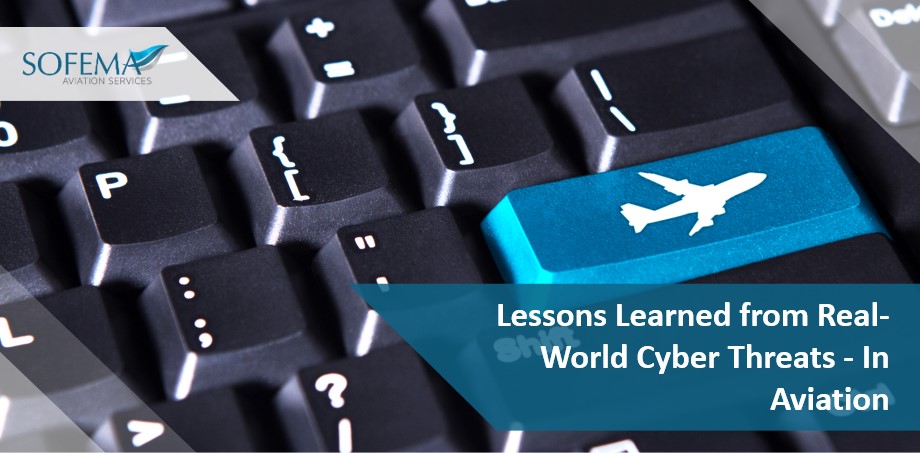
Sofema Aviation Services (SAS) shares lessons learned from real world Cyber Threats
Introduction
See the following typical examples and mitigations to “take away” Cybersecurity is a shared responsibility across all aviation functions.
- Whether managing aircraft configuration, scheduling maintenance, or overseeing day-to-day operations, Operators, CAMOs, and Maintainers must build cyber resilience into their core processes (not only to protect their business but to uphold safety and regulatory compliance.)
Operational Disruption Is a Real & Costly Threat
Cyberattacks are no longer isolated to data theft, they can paralyze operations.
- Example: Airlines grounded due to ransomware attacks on reservation systems or crew scheduling tools.
- Operator Impact: Flight delays, cancellations, reputational damage.
- CAMO/Maintainer Impact: Disruption in maintenance scheduling and data access, increasing AOG time and reducing availability.
Action required– Ensure redundancy and offline contingency plans for critical systems, including AMOS or other MRO/ERP platforms.
Supply Chain is a Major Vulnerability
Third-party providers (parts suppliers, software vendors) are often entry points for cyber threats.
- Example: Attackers use a small IT vendor or maintenance software provider to access a broader aviation network.
- CAMO/Maintainer Impact: Corrupted or manipulated maintenance data from a third-party tool.
- Operator Impact: Supply chain delays, counterfeit parts risk, compliance failures.
Action required Validate supplier cyber maturity. Include cybersecurity standards and audits in your supplier agreements.
Poor Access Control Equals High Risk
Inadequate access management (shared logins, unused accounts) invites exploitation.
- Example: An old contractor account is used to introduce malware.
- CAMO: Exposure of airworthiness data, affecting fleet compliance.
- Maintainers: Unauthorized access to maintenance documentation or task cards.
- Operators: Compromised crew rostering or electronic flight bags (EFBs).
Action Required Enforce strong identity and access management (IAM). Use MFA (multi-factor authentication), role-based access, and regular reviews.
Social Engineering is the Trojan Horse
The human factor remains the weakest link.
- Example: Phishing emails targeting MRO staff or CAMO engineers result in credential leaks or ransomware.
- All Stakeholders Impacted: Direct exposure to data loss or system compromise.
Action required Conduct continuous cyber awareness training tailored to aviation roles. Test with simulated phishing.
Data Integrity is as Critical as Data Availability
Altered maintenance records or corrupted configuration data can have a direct safety impact.
- CAMO: Potential for out-of-date or incorrect airworthiness directives.
- Maintainers: Incorrect task completion records.
- Operators: Misaligned aircraft configuration management.
Action Required – Use secure logging, data integrity validation, and robust change management for electronic records.
Insider Threats Are Often Overlooked
Disgruntled or careless insiders can cause as much harm as external hackers.
- Example: Intentional deletion or manipulation of maintenance records or planning data.
- CAMO/Maintainer: Loss of audit trail, regulatory findings.
- Operator: Possible regulatory grounding.
Action Required – Monitor user behavior and enforce least-privilege principles. Audit sensitive actions regularly.
Regulatory Non-Compliance Can Follow Cyber Events
A cyber event can expose an organization’s inability to maintain compliance under stress.
- Example: Inability to produce maintenance records or prove continuing airworthiness due to encrypted systems.
- CAMO Impact: EASA/FAA non-compliance issues.
- Maintainers: Certificate exposure if falsified data goes unnoticed.
- Operators: Operational Approval at risk.
Action Required – Align cybersecurity with SMS (Safety Management System) and Compliance Monitoring Functions. Report cyber threats as part of occurrence reporting when appropriate.
Real-Time Monitoring and Detection Save Downtime
Delayed detection results in longer downtime and greater damage.
- All: The faster you detect, the faster you can contain.
Action Required Implement SIEM (Security Information and Event Management) tools. Ensure 24/7 monitoring, even if outsourced.
Next Steps
Follow this link to our Library to find & download related documents for Free.
Sofema Aviation Services and Sofema Online provide Information and Cyber Security Regulatory Training as Classroom, Webinar and Online Training – Please see the websites or email [email protected].
Tags:
CAMO, Supply Chain, SAS blogs, cyber threats, high-risk, aviation organizations, Access Control, Real-World Cyber Threats, Aviation Organizations Operators, Maintainers, Operational Disruption, Costly Threat